

The GoLetty project aims to extract scientific article details such as abstract, authors, and its bibliographies and store them in a neat, relational data model. The goal in the future is to enable complex queries and analytics on each scientific article, this includes citation mapping that enables bibliometric calculation.
I am responsible for building the system to extract scientific article PDFs with GeneRation Of BIbliographic Data (GROBID). The annotated output is formatted as XML according to the TEI standard. I designed the database relations and built a parser to collect corresponding data from the XML output according to the original schema. Since the XML also includes table and image annotations by coordinates, I integrated a python module to “crop” the table and images from the original PDF. This enables two things:
1. Inserting structured data into the database
2. Displaying each scientific publication as a web-view article
I also separate the system into two parts: PDF extraction (heavy processing but light database I/O) and bibliography extraction (light processing but heavy database I/O).
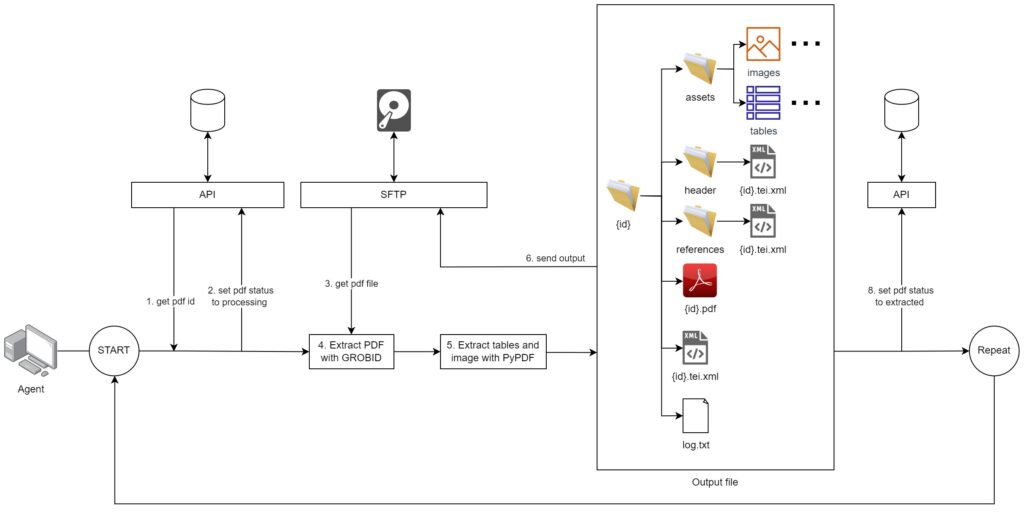
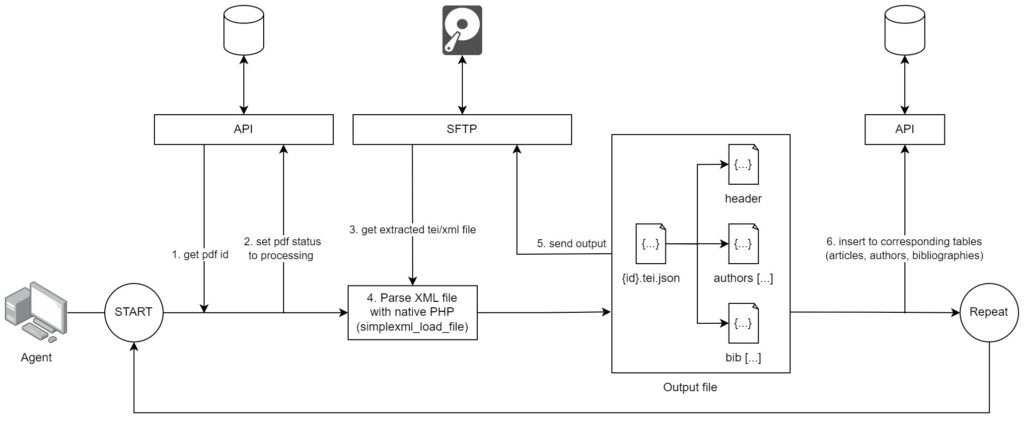
Because the processing load is high, the computation is done locally, while the server keeps the database and files. By sharing the database and creating a “pdf_processing” field that indicates the article state, I enabled a distributed system to extract PDFs simultaneously while keeping the database in sync. The file sync in the server is also managed with SFTP by each agent.
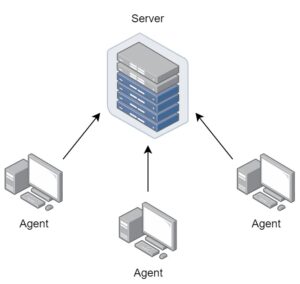
For this stack I use native PHP as API and processing, SQL as database, and Python specifically for cropping PDF files as a module that can be called from the main PHP script.
For an example, suppose the scientific article id is 170 and has PDF file as such:
The PDF extraction process would pass it into GROBID and the output would look like this:
<?xml version="1.0" encoding="UTF-8"?> <TEI xml:space="preserve" xmlns="http://www.tei-c.org/ns/1.0" xmlns:xsi="http://www.w3.org/2001/XMLSchema-instance" xsi:schemaLocation="http://www.tei-c.org/ns/1.0 https://raw.githubusercontent.com/kermitt2/grobid/master/grobid-home/schemas/xsd/Grobid.xsd" xmlns:xlink="http://www.w3.org/1999/xlink"> <teiHeader xml:lang="en"> <fileDesc> <titleStmt> <title level="a" type="main">Medical crisis during pandemic: Career preferences change in medical student</title> </titleStmt> <publicationStmt> <publisher/> <availability status="unknown"><licence/></availability> </publicationStmt> <sourceDesc> <biblStruct> <analytic> <author> <persName coords="1,223.13,165.06,54.15,8.96"><forename type="first">Dian</forename><surname>Natalia</surname></persName> <affiliation key="aff0"> <orgName type="department" key="dep1">Medical Profession Students</orgName> <orgName type="department" key="dep2">Medical Faculty</orgName> <orgName type="institution">Sriwijaya University</orgName> <address> <settlement>Palembang</settlement> <country key="ID">Indonesia</country> </address> </affiliation> </author> <author role="corresp"> <persName coords="1,285.63,165.06,97.73,8.96"><forename type="first">Rizma</forename><forename type="middle">Adlia</forename><surname>Syakurah</surname></persName> <email>rizma.syakurah@gmail.com</email> <affiliation key="aff1"> <orgName type="department">Public Health Faculty</orgName> <orgName type="institution">Sriwijaya University</orgName> <address> <settlement>Palembang</settlement> <country key="ID">Indonesia</country> </address> </affiliation> </author> <author> <persName coords="1,85.10,227.70,49.58,8.96"><forename type="first">Article</forename><surname>Info</surname></persName> </author> <author> <affiliation key="aff2"> <orgName type="department">Public Health Faculty</orgName> <orgName type="institution">Sriwijaya University Jl. Raya Palembang-Prabumulih KM</orgName> <address> <addrLine>32 Indralaya</addrLine> </address> </affiliation> </author> <author> <affiliation key="aff3"> <orgName type="institution" key="instit1">Ogan Ilir</orgName> <orgName type="institution" key="instit2">Sumatera Selatan</orgName> <address> <postCode>30662</postCode> <country key="ID">Indonesia</country> </address> </affiliation> </author> <title level="a" type="main">Medical crisis during pandemic: Career preferences change in medical student</title> </analytic> <monogr> <imprint> <date/> </imprint> </monogr> <idno type="DOI">10.11591/ijere.v10i4.21897</idno> <note type="submission">Received Mar 13, 2021 Revised Aug 29, 2021 Accepted Sep 10, 2021</note> </biblStruct> </sourceDesc> </fileDesc> <encodingDesc> <appInfo> <application version="0.7.2" ident="GROBID" when="2023-03-07T13:38+0000"> <desc>GROBID - A machine learning software for extracting information from scholarly documents</desc> <ref target="https://github.com/kermitt2/grobid"/> </application> </appInfo> </encodingDesc> <profileDesc> <textClass> <keywords>Career preference COVID-19 Indonesia Medical student Pandemics</keywords> </textClass> <abstract> <div xmlns="http://www.tei-c.org/ns/1.0"><p>The COVID-19 pandemic is a major threat to global education. Incidental emotions of fear and anxiety during pandemic have unconsciously influenced preference and outcome about their future career. This study aimed to assess the effect of the COVID-19 pandemic towards career preference change in medical students. A total of 1,027 responses from all over the medical students in Indonesia were collected from an online questionnaire which was broadcasted through social media from 14th July 2020-21st July 2020. This study was using Fear of COVID-19 Scale (FCV-19S) and Depression Anxiety Stress-Scale-21 (DASS-21) to assess fear of COVID-19, stress, anxiety, and depression. Out of 1,027 respondents, 44.6% had stressed, 47.8% had anxiety, and 18.5% had depression with an average FCV-19S score was 17.1. The result showed that the fear and anxiety of COVID-19 during the pandemic had associated significantly with the career decisions in medical students (p=<0.05). Indonesian policymakers had to keep in mind that the fear of the COVID-19 pandemic in medical students is due to the high mortality COVID-19 cases of health workers in Indonesia. Health workers need adequate working conditions and specific protection, this requires prompt attention from stakeholders.</p></div> </abstract> </profileDesc> </teiHeader> <facsimile> <surface n="1" ulx="0.0" uly="0.0" lrx="595.32" lry="842.04"/> <surface n="2" ulx="0.0" uly="0.0" lrx="595.32" lry="842.04"/> <surface n="3" ulx="0.0" uly="0.0" lrx="595.32" lry="842.04"/> <surface n="4" ulx="0.0" uly="0.0" lrx="595.32" lry="842.04"/> <surface n="5" ulx="0.0" uly="0.0" lrx="595.32" lry="842.04"/> <surface n="6" ulx="0.0" uly="0.0" lrx="595.32" lry="842.04"/> <surface n="7" ulx="0.0" uly="0.0" lrx="595.32" lry="842.04"/> </facsimile> <text xml:lang="en"> <body> <div xmlns="http://www.tei-c.org/ns/1.0"><head n="1.">INTRODUCTION</head><p>As of early July 2020, the COVID-19 pandemic has infected more than 12,3 million people worldwide and caused quite 550,000 deaths <ref type="bibr" coords="1,263.32,625.94,10.58,8.96" target="#b0">[1]</ref>. On 25th July 2020, Indonesia had 95,418 of confirmed cases passed the total of confirmed cases in China, and occupy the ranked 24th out of 222 countries <ref type="bibr" coords="1,473.05,637.46,10.66,8.96" target="#b1">[2]</ref>. On 23rd May 2021, Indonesia had 1,775,220 cases and occupied the ranked 18th out of 222 countries <ref type="bibr" coords="1,490.42,648.98,10.60,8.96" target="#b2">[3]</ref>. The COVID-19 pandemic threatens physical health, business, economy, and brings unprecedented challenges for people's careers <ref type="bibr" coords="1,150.67,671.90,10.74,8.96" target="#b0">[1]</ref>, <ref type="bibr" coords="1,167.54,671.90,10.60,8.96" target="#b3">[4]</ref>.</p><p>The COVID-19 pandemic can be viewed as a career shock that significantly effects on an individual's career <ref type="bibr" coords="1,163.10,693.88,10.58,9.05" target="#b4">[5]</ref>. Around the world, 278 doctors passed on as a result of COVID-19 after a web search on 15 April, 2020 <ref type="bibr" coords="1,159.97,704.90,10.58,8.96" target="#b5">[6]</ref>. The pace of serious disease is twice higher for doctors than for various laborers (8.1% versus 4.1%) <ref type="bibr" coords="1,144.91,715.94,10.58,8.96" target="#b6">[7]</ref>. The workers may likewise encounter expanded tension and dread as a result of the vulnerability they have looked about their future careers <ref type="bibr" coords="1,317.82,726.86,10.58,8.96" target="#b7">[8]</ref>. Similarly, the impact of COVID-19 has begun and affects different parts of medical students <ref type="bibr" coords="1,286.10,737.89,10.58,8.96" target="#b3">[4]</ref>. A medical crisis like the COVID-19 pandemic will undeniably affect medical students <ref type="bibr" coords="1,229.29,748.84,10.84,8.96" target="#b8">[9]</ref>. However, COVID-19 has transformed medical students and medical <ref type="bibr" coords="2,151.27,82.26,10.58,8.96" target="#b3">[4]</ref>. Besides applying distance learning for medical students, that actually a new educational concept for them, before the pandemic, 89.5% of medical students wanted to continue to specialist training after graduation <ref type="bibr" coords="2,152.92,104.22,15.41,8.96" target="#b9">[10]</ref>, <ref type="bibr" coords="2,175.46,104.22,15.32,8.96" target="#b10">[11]</ref>. The career preferences were centered on the three broad clinical departments as the most favored careers, specifically General Surgery, Pediatrics, and Internal Medicine. The influencing factors of the medical students' decision were driven by their capabilities and their expectation <ref type="bibr" coords="2,467.14,126.18,15.34,8.96" target="#b10">[11]</ref>, <ref type="bibr" coords="2,488.86,126.18,15.31,8.96" target="#b11">[12]</ref>. Doctors as the front-liner play clinical roles where they may be at risk of contracting the virus infection, but the risk may differ by specialty <ref type="bibr" coords="2,271.67,148.14,15.31,8.96" target="#b12">[13]</ref>. Health workers are needing adequate working conditions and specific protection <ref type="bibr" coords="2,184.71,159.06,10.58,8.96" target="#b6">[7]</ref>. Medical career preferences and determinants were a dynamic, complex, and multifactorial process <ref type="bibr" coords="2,177.29,170.10,15.31,8.96" target="#b13">[14]</ref>. Self-efficacy theory introduced an approach to understanding a large group of components, known to impact an individual's career decisions. Self-efficacy theory depends on a model of the triad (affective, biological, and cognitive) <ref type="bibr" coords="2,269.39,192.06,15.31,8.96" target="#b14">[15]</ref>. Affective states such as emotional arousal like anger, fear, and depression. A higher mental disturbance was found among health workers during the pandemic, and medical students are no exception <ref type="bibr" coords="2,223.31,214.02,10.73,8.96" target="#b6">[7]</ref>.</p><p>Fear of reaching people who are conceivably infected by COVID-19 has been reported <ref type="bibr" coords="2,482.68,225.42,15.57,8.96" target="#b14">[15]</ref>, <ref type="bibr" coords="2,505.54,225.42,15.32,8.96" target="#b15">[16]</ref>. Incidental emotions of fear have unconsciously influenced risk preference and outcome about their future career which is making a drawn-out effect on human psychology <ref type="bibr" coords="2,354.12,248.37,15.49,8.96" target="#b16">[17]</ref>, <ref type="bibr" coords="2,376.63,248.37,15.32,8.96" target="#b17">[18]</ref>. Our emotions are an important part of our decision-making process with an impact on judgment and choice. Fear is related with appraisals of uncertainty, that advancing a risk-avoidant behavior <ref type="bibr" coords="2,300.18,271.41,15.31,8.96" target="#b17">[18]</ref>. The existence of the COVID-19 pandemic makes emotional changes to fear that might affect someone to a risk-avoidant behavior and causes the change of specialty preference. Therefore, researchers want to know the pandemic impact on specialty preferences among medical students.</p></div> <div xmlns="http://www.tei-c.org/ns/1.0"><head n="2.">RESEARCH METHOD</head><p>This study is an analytic observational with a cross-sectional methodology directed on a medical student at any stage of education, internship doctor, and fresh graduate, and any institution in Indonesia. Participants obtained by snowball sampling technique who responded to online questionnaires distributed through social media platforms from 14th July 2020 to 21st July 2020.</p><p>In this study, the association between psychological factors and career preferences was measured by Fear of COVID-19 Scale (FCV-19S) and Depression Anxiety Stress-Scale-21 (DASS-21). The FCV-19S was utilized in this study to evaluate the fear of the COVID-19 pandemic <ref type="bibr" coords="2,364.18,417.71,15.31,8.96" target="#b18">[19]</ref>. The participants show their degree of concurrence with the assertions using a five-item Likert-type scale. Answers included "strongly agree", "strongly disagree", "disagree", "neither agree nor disagree", and "agree". The bottom score feasible for every statement is 1, and therefore the greatest is 5. An entire score is determined by summing up every score (ranging from 7 to 35). The greater the fear of the COVID-19 pandemic shows the higher score.</p><p>This study also used DASS-21 to assess three factors. This questionnaire consists of 21 items and measures stress, anxiety, and depression in normal, mild, moderate, severe, extremely severe levels. The level of depression is reflected using 0-5 points. The DASS-21 validity was acceptable to excellent ranges. The results have been very positive and are in the range of good to very good for all scales <ref type="bibr" coords="2,459.94,505.91,15.39,8.96" target="#b19">[20]</ref>. While, the career preferences divide into three categories, namely hesitancy in career selection, influences career decision, increase certain career interests used "yes" or "no" category.</p><p>IBM SPSS Statistics 24 program was accustomed to analyze the variables. Quantitative variables were described by the mean and standard deviation. Qualitative variables were described by frequency distribution. The distribution of qualitative and quantitative variables was compared using the two-tailed Chisquare test. The means of FCV-19S and career preference were compared using an independent T-test (p<0.05 as statistical significance, for all tests).</p></div> <div xmlns="http://www.tei-c.org/ns/1.0"><head n="3.">RESULTS AND DISCUSSION</head><p>The authors collected 1,027 responses from all medical students in Indonesia from online questionnaires, broadcasted through social media from 14th-21st July 2020. Of the 1027 medical students who filled the questionnaire, 678 (66%) were female and 349 (34%) were male with an average age of 23 years. Respondents were dominated by the pre-clinic medical student of 480 (46.7%) respondents. Out of 1027 respondents, 9.7% of respondents had comorbidity, 26.1% had done COVID-19 examination, and only 2.2% of respondents had ever been diagnosed as positive as shown in Table <ref type="table" coords="2,391.02,685.70,3.76,8.96" target="#tab_0">1</ref>.</p><p>Figure <ref type="figure" coords="2,150.50,696.62,4.98,8.96">1</ref> shows that the most preferred career preferences were pediatrics (217; 26.4%) followed by obstetric gynecology (270; 26.3%) and internal medicine (252; 24.6%). Figure <ref type="figure" coords="2,422.28,707.66,4.98,8.96">2</ref> shows the factors that affected students' decisions to opt for their careers. The most frequent reason for choosing a future career was academic interest (879; 85.6%), followed by opinion about matches with respondent's capabilities (327; 31.8%). Conversely, 128 (12.5%) medical students reported that they were still undecided to opt for their future careers. Figure <ref type="figure" coords="3,151.65,688.34,4.98,8.96" target="#fig_2">3</ref> shows that the most frequent consideration in determining career preference during the COVID-19 Pandemic was a career with less exposure to COVID-19 (38.6%) followed by careers that were more needed during the pandemic (35.2%). However, 519 (50.6%) medical students reported that the COVID-19 pandemic does not affect their career preferences.</p><p>Data obtained from the questionnaire were analyzed using Chi-square. Gender is associated significantly with hesitancy in career selection (p-value <0.05). Educational stage associated significantly with hesitancy in career selection and increasing certain career interests (p-value<0.05). As shown in fear of being infected, transmitting, and death from COVID-19 had a significant association with hesitancy in career selection, influence the career decision, and increase certain career interest (p-value<0.05). The comorbid factors in respondents or their families had a significant impact on career decisions for medical students due to the COVID-19 Pandemic (p-value<0.05). Anxiety had a significant association with the three statements in career preferences (p-value<0.05). And, depression had a significant association with hesitancy in career selection (p-value=0.017). Table 2 also shows that there were significant differences in the means of FCV-19S score due to career preferences. The impact of COVID-19 on medical students could be considerable. Medical students were postponed from attending clinical rotations in several teaching hospitals. This postponement could reduce exposure to specific specialties among medical students. In this study, the most preferred specialties were Pediatrics, followed by Obstetric Gynecology, and Internal Medicine. Another study showed that Surgery, Pediatrics, Obstetrics and Gynecology, and Internal Medicine were the most desirable options among medical students <ref type="bibr" coords="4,154.77,751.12,15.38,8.96" target="#b9">[10]</ref>, <ref type="bibr" coords="4,176.54,751.12,15.36,8.96" target="#b20">[21]</ref>. The different reasons for the most preferred specialties could be attributed to gender differences. Male students more preferred to specialize in Surgery, the reverse for female students more preferred to specialize in Pediatrics <ref type="bibr" coords="5,187.37,105.42,15.72,8.96" target="#b21">[22]</ref>- <ref type="bibr" coords="5,207.02,105.42,15.72,8.96" target="#b25">[25]</ref>. Females tend to opt-in fewer specialties such as Pediatrics, General Practice, and Obstetric Gynecology which are characterized by a focus on patient-doctor relations <ref type="bibr" coords="5,479.15,116.46,15.39,8.96" target="#b23">[23]</ref>. These results indicate that there is an increased prevalence of Pediatrics and Obstetric Gynecology as the most preferred career among medical students because of the higher percentage of female participants.</p><p>The most frequent reason to opt for a future specialty was academic interest followed by their capabilities. Individual interest was the most affecting element in determining students' career decisions <ref type="bibr" coords="5,505.35,160.40,15.31,9.05" target="#b25">[25]</ref>. Individual interests such as academic interests were the most well-known reason for opting for a medical career in developing or developed countries <ref type="bibr" coords="5,267.73,182.58,15.31,8.96" target="#b26">[26]</ref>. Furthermore, the previous study showed that a portion of the medical students opts for their career because match their abilities. These outcomes have shown that medical students already knew about their capacities and their potential to opt for a career <ref type="bibr" coords="5,447.22,204.66,15.43,8.96" target="#b11">[12]</ref>, <ref type="bibr" coords="5,468.94,204.66,15.32,8.96" target="#b27">[27]</ref>.</p><p>Conversely, this study showed that 12.5% of medical students reported that they were still undecided to opt for their future careers. Similar findings had been reported that only 10% of respondents in the study could not select a specialty <ref type="bibr" coords="5,247.43,237.66,15.31,8.96" target="#b11">[12]</ref>. Past studies showed that early specialty exposure in clinical training may stimulate students' academic interest and develop their clinical skills <ref type="bibr" coords="5,427.92,248.73,15.31,8.96" target="#b26">[26]</ref>. The experience of working independently as a doctor is a reason to choose their final career <ref type="bibr" coords="5,402.74,259.77,15.66,8.96" target="#b13">[14]</ref>. There was a significant association between finishing a clinical rotation to opt for the career specialty <ref type="bibr" coords="5,399.46,270.81,15.79,8.96" target="#b10">[11]</ref>, <ref type="bibr" coords="5,421.75,270.81,15.32,8.96" target="#b28">[28]</ref>. A higher percentage of a pre-clinical medical students in our study could be the reason because they had not finished clinical rotations yet. Therefore, parents or families also became one of the factors for medical students to make decisions about their career preferences <ref type="bibr" coords="5,251.67,303.81,15.35,8.96" target="#b29">[29]</ref>, <ref type="bibr" coords="5,274.49,303.81,15.31,8.96" target="#b30">[30]</ref>. In the collectivist environment, like Indonesia, parents' and elderly's opinions are heavily regarded. Parents' discernment will influence their assessment, because the specific career becoming more critical <ref type="bibr" coords="5,244.02,325.89,15.62,8.96" target="#b30">[30]</ref>, <ref type="bibr" coords="5,266.69,325.89,15.31,8.96" target="#b31">[31]</ref>. This study showed that only nearly one-fourth of students chose advice from parents as the determinant of their career preferences. Most students did not seem to feel the pressure from parents to opt for their future careers. This may be because they are not yet at that stage when they need to talk about it <ref type="bibr" coords="5,210.95,358.89,15.58,8.96" target="#b28">[28]</ref>.</p><p>One of two medical students had symptoms of stress or anxiety. Contrasted with non-health workers, health workers had a higher prevalence of anxiety, depression, and sleeping disorders especially insomnia <ref type="bibr" coords="5,126.94,392.01,15.36,8.96" target="#b29">[29]</ref>. The previous study showed that the medical staff has a more significant level of fear, depression, and anxiety than the regular staff <ref type="bibr" coords="5,283.95,403.05,15.54,8.96" target="#b32">[32]</ref>. An observational study involving 1,207 Indonesian medical students revealed that almost half of the respondents had symptoms of anxiety during the COVID-19 pandemic <ref type="bibr" coords="5,127.77,425.03,15.36,8.96" target="#b33">[33]</ref>. It was possible that medical students also have a higher level of fear or anxiety than other students. With the demands and pressing factors that medical students face, it is nothing unexpected that medical student's psychological, physical, and spiritual wellbeing can be compromised <ref type="bibr" coords="5,441.52,447.11,15.47,8.96" target="#b34">[34]</ref>. Higher rates of diagnosed suicidal ideation, mood disorders, and psychological distress were found significantly in medical students <ref type="bibr" coords="5,121.07,469.19,15.44,8.96" target="#b35">[35]</ref>. There was a shred of significant evidence that medical students overall experience psychiatric disorders and psychological distress <ref type="bibr" coords="5,239.55,480.11,15.54,8.96" target="#b36">[36]</ref>. Despite widespread fear and uncertainty about the COVID-19 pandemic, these results indicate that fear of COVID-19 was associated with career preferences. FCV-19S, fear of being infected, transmitting, death from COVID-19, having comorbid factors, anxiety was significantly associated with career preferences in the medical student during the pandemic. This kind of fear had a significant relationship with hesitancy in career selection, influence the career decision, and increase certain career interests (p-value<0.05). People with comorbid factors were significantly related to career preferences. Comorbid factors could increase fear of COVID-19 because people with comorbidity have increased mortality risk by five times <ref type="bibr" coords="5,240.29,557.27,15.42,8.96" target="#b37">[37]</ref>. This study also showed that there were significant differences in the means of FCV-19S score due to career preferences (p-value<0.05). The higher scores of the FCV-19S show more serious fear of COVID-19 <ref type="bibr" coords="5,239.30,579.38,15.31,8.96" target="#b18">[19]</ref>.</p><p>A pandemic of COVID-19 can form panic, fear, and anxiety rapidly among people overall <ref type="bibr" coords="5,505.25,590.42,15.76,8.96" target="#b18">[19]</ref>, <ref type="bibr" coords="5,85.34,601.46,15.42,8.96" target="#b38">[38]</ref>. This study showed medical students start to consider a career with less exposure to COVID-19 and a career that more needed during the pandemic. Because of the flare-up of COVID-19, fear emerges among health workers in regards to opt their future career <ref type="bibr" coords="5,296.54,623.42,15.31,8.96" target="#b16">[17]</ref>. With the high rate of infection and moderate-high mortality, people started worrying about the pandemic. Self-efficacy theory depends on a model of the triad (affective, cognitive, biological) <ref type="bibr" coords="5,226.51,645.50,15.31,8.96" target="#b14">[15]</ref>. Affective states such as emotional states like anger, fear, and depression. Fear of contacting people who are potentially infected by COVID-19 has been shown <ref type="bibr" coords="5,483.54,656.54,15.56,8.96" target="#b15">[16]</ref>, <ref type="bibr" coords="5,505.90,656.54,15.31,8.96" target="#b16">[17]</ref>. Many studies have found that incidental emotions such as fear play a huge part in decision-making processes <ref type="bibr" coords="5,85.34,678.50,16.76,8.96" target="#b32">[32]</ref> Risk avoidance behavior is a result of fear <ref type="bibr" coords="5,277.66,678.50,15.59,8.96" target="#b17">[18]</ref>, <ref type="bibr" coords="5,299.93,678.50,15.34,8.96" target="#b39">[39]</ref>. Fear of the COVID-19 pandemic had the potential among medical students to change career preferences. The limitation in this study was limited sample representative among medical student at any stage of education, internship doctor, and fresh graduate, and the various of institution. </p></div> <div xmlns="http://www.tei-c.org/ns/1.0"><head n="4.">CONCLUSION</head><p>This study results showed that the COVID-19 pandemic affects human feelings especially in medical students significantly stuck with various negative perspectives. Thus, anxiety and fear can influence hesitancy in their future career. The Indonesian policymakers should consider this study to help medical students and health workers in Indonesia get better anticipation in the needs to decrease fear of COVID-19 in medical students. The emergence of COVID-19 has disrupted education and this requires prompt attention from stakeholders.</p></div><figure xmlns="http://www.tei-c.org/ns/1.0" xml:id="fig_0" coords="2,118.82,58.32,8.87,9.72;2,454.42,59.20,70.24,8.96;2,85.10,776.44,276.09,8.96;2,85.10,59.32,20.10,8.96;2,85.34,82.26,62.98,8.96"><head></head><label></label><figDesc>ISSN: 2252-8822 Int J Eval & Res Educ, Vol. 10, No. 4, December 2021: 1255 -1261 1256 school faculties</figDesc></figure> <figure xmlns="http://www.tei-c.org/ns/1.0" xml:id="fig_1" coords="3,165.26,455.99,279.06,8.96;3,160.20,263.33,288.93,177.90"><head>Figure 1 .Figure 2 .</head><label>12</label><figDesc>Figure 1. Top 15 most selected careers by medical students (n=1,027)</figDesc><graphic url="image-2.png" coords="3,160.20,263.33,288.93,177.90" type="bitmap" /></figure> <figure xmlns="http://www.tei-c.org/ns/1.0" xml:id="fig_2" coords="4,105.38,307.89,398.90,8.96;4,285.41,319.41,38.95,8.96;4,164.45,178.31,280.99,115.30"><head>Figure 3 .</head><label>3</label><figDesc>Figure 3. Consideration in determining career preference among medical student during COVID-19 pandemic</figDesc><graphic url="image-4.png" coords="4,164.45,178.31,280.99,115.30" type="bitmap" /></figure> <figure xmlns="http://www.tei-c.org/ns/1.0" xml:id="fig_3" coords="5,85.10,59.20,89.16,8.96;5,265.01,59.20,70.38,8.96;5,482.02,58.32,8.87,9.72;5,144.98,776.44,379.72,8.96;5,504.58,59.32,20.10,8.96"><head></head><label></label><figDesc>Int J Eval & Res Educ ISSN: 2252-8822 Medical crisis during pandemic: Career preferences change in medical student (Dian Natalia) 1259</figDesc></figure> <figure xmlns="http://www.tei-c.org/ns/1.0" xml:id="fig_4" coords="6,118.82,58.32,8.87,9.72;6,454.42,59.20,70.24,8.96;6,85.10,776.44,276.09,8.96;6,85.10,59.32,20.10,8.96"><head></head><label></label><figDesc>ISSN: 2252-8822 Int J Eval & Res Educ, Vol. 10, No. 4, December 2021: 1255 -1261 1260</figDesc></figure> <figure xmlns="http://www.tei-c.org/ns/1.0" type="table" xml:id="tab_0" coords="3,85.10,58.32,439.59,727.08"><head>Table 1 .</head><label>1</label><figDesc>Demography of respondents</figDesc><table coords="3,85.10,58.32,405.79,182.60"><row><cell>Int J Eval & Res Educ</cell><cell cols="2">ISSN: 2252-8822</cell><cell></cell></row><row><cell>No.</cell><cell>Variable</cell><cell></cell><cell>n (%)</cell></row><row><cell>1.</cell><cell>Age, mean ± SD</cell><cell></cell><cell>21.47±2.283</cell></row><row><cell>2.</cell><cell>Gender</cell><cell>Male</cell><cell>349 (34)</cell></row><row><cell></cell><cell></cell><cell>Female</cell><cell>678 (66)</cell></row><row><cell>3.</cell><cell>Educational stage</cell><cell>Pre-clinic</cell><cell>480 (46.7)</cell></row><row><cell></cell><cell></cell><cell cols="2">Clinical (co-assistant) 363 (35.3)</cell></row><row><cell></cell><cell></cell><cell>Internship</cell><cell>156 (15.2)</cell></row><row><cell></cell><cell></cell><cell>Fresh graduate</cell><cell>28 (2.8)</cell></row><row><cell>4.</cell><cell>Having comorbidity</cell><cell>Yes</cell><cell>100 (9.7)</cell></row><row><cell></cell><cell></cell><cell>No</cell><cell>927 (90.3)</cell></row><row><cell>5.</cell><cell>Having family with comorbidity</cell><cell>Yes</cell><cell>508 (49.5)</cell></row><row><cell></cell><cell></cell><cell>No</cell><cell>519 (50.5)</cell></row><row><cell>6.</cell><cell>Has done a COVID-19 examination</cell><cell>Yes</cell><cell>258 (26.1)</cell></row><row><cell></cell><cell></cell><cell>No</cell><cell>759 (73.9)</cell></row><row><cell>7.</cell><cell cols="2">Have ever been diagnosed COVID-19 (+) Yes</cell><cell>23 (2.2)</cell></row><row><cell></cell><cell></cell><cell>No</cell><cell>1,004 (97.8)</cell></row></table><note>Medical crisis during pandemic: Career preferences change in medical student (Dian Natalia) 1257</note></figure> <figure xmlns="http://www.tei-c.org/ns/1.0" type="table" xml:id="tab_1" coords="3,492.16,754.24,32.91,8.96"><head>Table 2 ,</head><label>2</label><figDesc></figDesc><table coords="4,118.82,58.32,8.87,9.72"><row><cell></cell></row></table><note>Int J Eval & Res Educ, Vol. 10, No. 4, December 2021: 1255 -1261 1258</note></figure> <figure xmlns="http://www.tei-c.org/ns/1.0" type="table" xml:id="tab_2" coords="4,84.86,350.61,427.95,323.36"><head>Table 2 .</head><label>2</label><figDesc>COVID-19 pandemic and career preference</figDesc><table coords="4,84.86,362.12,427.95,311.85"><row><cell></cell><cell></cell><cell></cell><cell></cell><cell cols="2">Career preference</cell><cell></cell><cell></cell></row><row><cell cols="2">COVID-19 pandemic</cell><cell cols="2">Hesitancy in career</cell><cell cols="2">Influences career</cell><cell cols="2">Increase certain career</cell></row><row><cell></cell><cell></cell><cell cols="2">selection (n, p value)</cell><cell cols="2">decision (n, p value)</cell><cell cols="2">interests (n, p value)</cell></row><row><cell>Gender</cell><cell>Male Female</cell><cell>72 204</cell><cell>0.001*</cell><cell>95 210</cell><cell>0.213</cell><cell>165 347</cell><cell>0.236</cell></row><row><cell>Educational stage</cell><cell>Pre-clinical</cell><cell>116</cell><cell></cell><cell>138</cell><cell></cell><cell>282</cell><cell></cell></row><row><cell></cell><cell>Clinical (co-assistant) Internship</cell><cell>109 48</cell><cell>0.036*</cell><cell>104 58</cell><cell>0.091</cell><cell>163 60</cell><cell>0.000*</cell></row><row><cell></cell><cell>Fresh graduate</cell><cell>3</cell><cell></cell><cell>5</cell><cell></cell><cell>7</cell><cell></cell></row><row><cell>Fear being infected of COVID-19 during education</cell><cell>Yes No</cell><cell>265 11</cell><cell>0.000*</cell><cell>288 17</cell><cell>0.000*</cell><cell>453 59</cell><cell>0.000*</cell></row><row><cell>Fear of transmitting COVID-</cell><cell>Yes</cell><cell>273</cell><cell>0.000*</cell><cell>300</cell><cell>0.001*</cell><cell>492</cell><cell>0.040*</cell></row><row><cell>19 to your surroundings</cell><cell>No</cell><cell>3</cell><cell></cell><cell>5</cell><cell></cell><cell>20</cell><cell></cell></row><row><cell>Fear of death from COVID-</cell><cell>Yes</cell><cell>218</cell><cell>0.000*</cell><cell>238</cell><cell>0.000*</cell><cell>355</cell><cell>0.000*</cell></row><row><cell>19</cell><cell>No</cell><cell>58</cell><cell></cell><cell>67</cell><cell></cell><cell>157</cell><cell></cell></row><row><cell>With comorbidity</cell><cell>Yes No</cell><cell>35 241</cell><cell>0.054</cell><cell>47 258</cell><cell>0.000*</cell><cell>56 456</cell><cell>0.196</cell></row><row><cell>Family with comorbidity</cell><cell>Yes No</cell><cell>148 128</cell><cell>0.106</cell><cell>179 126</cell><cell>0.000*</cell><cell>263 249</cell><cell>0.224</cell></row><row><cell>Has done a COVID-19 examination</cell><cell>Yes No</cell><cell>70 206</cell><cell>0.746</cell><cell>77 228</cell><cell>0.687</cell><cell>129 393</cell><cell>0.038*</cell></row><row><cell>Have ever been diagnosed COVID-19 (+)</cell><cell>Yes No</cell><cell>9 276</cell><cell>0.180</cell><cell>8 377</cell><cell>0.589</cell><cell>9 503</cell><cell>0.298</cell></row><row><cell>Domicile in a high-risk zone</cell><cell>Yes No</cell><cell>164 112</cell><cell>0.044*</cell><cell>181 123</cell><cell>0.515</cell><cell>315 197</cell><cell>0.478</cell></row><row><cell>Stress</cell><cell>Yes No</cell><cell>136 140</cell><cell>0.067</cell><cell>150 155</cell><cell>0.055</cell><cell>250 262</cell><cell>0.007*</cell></row><row><cell>Anxiety</cell><cell>Yes No</cell><cell>164 112</cell><cell>0.000*</cell><cell>175 130</cell><cell>0.000*</cell><cell>266 246</cell><cell>0.008*</cell></row><row><cell>Depression</cell><cell>Yes No</cell><cell>63 213</cell><cell>0.030*</cell><cell>65 240</cell><cell>0.132</cell><cell>103 409</cell><cell>0.183</cell></row><row><cell>FCV-19</cell><cell>Mean (SD)</cell><cell>18.24</cell><cell>0.000**</cell><cell>18.3</cell><cell>0.000**</cell><cell>17.89</cell><cell>0.000**</cell></row><row><cell cols="4">* p-value <0.05, using Pearson Chi-square if expected count <20% (Table>2x2)</cell><cell></cell><cell></cell><cell></cell><cell></cell></row><row><cell cols="2">**p-value <0.05, using Independent T-test</cell><cell></cell><cell></cell><cell></cell><cell></cell><cell></cell><cell></cell></row></table></figure> </body> <back> <div type="references"> <listBibl> <biblStruct coords="6,107.66,197.51,417.04,8.10;6,107.66,207.83,357.41,8.10" xml:id="b0"> <monogr> <title level="m" type="main">Coronavirus disease 2019 (COVID-19): Situation report-88</title> <ptr target="https://www.who.int/publications/m/item/situation-report---88" /> <imprint> <date type="published" when="2020-07-25">2020. Jul. 25, 2020</date> </imprint> </monogr> <note>World Health Organization (WHO)</note> </biblStruct> <biblStruct coords="6,107.66,218.15,417.06,8.10;6,107.66,228.78,262.70,8.96" xml:id="b1"> <monogr> <title level="m" type="main">COVID-19 coronavirus pandemic reported cases</title> <author> <persName coords=""><surname>Worldometers</surname></persName> </author> <ptr target="https://www.worldometers.info/coronavirus" /> <imprint> <date type="published" when="2020-07-25">2020. Jul. 25, 2020</date> </imprint> </monogr> </biblStruct> <biblStruct coords="6,107.66,239.99,417.06,8.10;6,107.66,250.34,266.06,8.10" xml:id="b2"> <monogr> <title level="m" type="main">COVID-19 coronavirus pandemic reported cases</title> <author> <persName coords=""><surname>Worldometers</surname></persName> </author> <ptr target="https://www.worldometers.info/coronavirus" /> <imprint> <date type="published" when="2020-05-23">2020. May 23, 2021</date> </imprint> </monogr> </biblStruct> <biblStruct coords="6,107.66,260.69,417.06,8.19;6,107.66,271.10,77.85,8.10" xml:id="b3"> <analytic> <title level="a" type="main">The impact of COVID-19 on medical education</title> <author> <persName coords=""><forename type="first">M</forename><forename type="middle">N</forename><surname>Ferrel</surname></persName> </author> <author> <persName coords=""><forename type="first">J</forename><forename type="middle">J</forename><surname>Ryan</surname></persName> </author> <idno type="DOI">10.7759/cureus.7492</idno> </analytic> <monogr> <title level="j">Cureus</title> <imprint> <biblScope unit="volume">12</biblScope> <biblScope unit="issue">3</biblScope> <date type="published" when="2020">2020</date> </imprint> </monogr> </biblStruct> <biblStruct coords="6,107.66,281.33,416.82,8.19;6,107.66,291.74,388.13,8.10" xml:id="b4"> <analytic> <title level="a" type="main">The Covid-19 crisis as a career shock: Implications for careers and vocational behavior</title> <author> <persName coords=""><forename type="first">J</forename><surname>Akkermans</surname></persName> </author> <author> <persName coords=""><forename type="first">J</forename><surname>Richardson</surname></persName> </author> <author> <persName coords=""><forename type="first">M</forename><surname>Kraimer</surname></persName> </author> <idno type="DOI">10.1016/j.jvb.2020.103434</idno> </analytic> <monogr> <title level="j">Journal of Vocational Behavior</title> <imprint> <biblScope unit="volume">119</biblScope> <date type="published" when="2020-06">Jun. 2020</date> </imprint> </monogr> </biblStruct> <biblStruct coords="6,107.66,302.09,417.12,8.19;6,107.66,312.50,392.45,8.10" xml:id="b5"> <analytic> <title level="a" type="main">Physician deaths from corona virus (COVID-19) disease</title> <author> <persName coords=""><forename type="first">E</forename><forename type="middle">B</forename><surname>Ing</surname></persName> </author> <author> <persName coords=""><forename type="first">Q</forename><forename type="middle">A</forename><surname>Xu</surname></persName> </author> <author> <persName coords=""><forename type="first">A</forename><surname>Salimi</surname></persName> </author> <author> <persName coords=""><forename type="first">N</forename><surname>Torun</surname></persName> </author> <idno type="DOI">10.1093/occmed/kqaa088</idno> </analytic> <monogr> <title level="m">Occupational medicine</title> <meeting><address><addrLine>Oxford, England</addrLine></address></meeting> <imprint> <date type="published" when="2020">2020</date> <biblScope unit="volume">70</biblScope> <biblScope unit="page" from="370" to="374" /> </imprint> </monogr> </biblStruct> <biblStruct coords="6,107.66,322.73,417.06,8.19;6,107.66,333.14,348.41,8.10" xml:id="b6"> <analytic> <title level="a" type="main">COVID-19 among health workers in Germany and Malaysia</title> <author> <persName coords=""><forename type="first">A</forename><surname>Nienhaus</surname></persName> </author> <author> <persName coords=""><forename type="first">R</forename><surname>Hod</surname></persName> </author> <idno type="DOI">10.3390/ijerph17134881</idno> </analytic> <monogr> <title level="j">International Journal of Environmental Research and Public Health</title> <imprint> <biblScope unit="volume">17</biblScope> <biblScope unit="issue">13</biblScope> <date type="published" when="2020">2020</date> </imprint> </monogr> </biblStruct> <biblStruct coords="6,107.66,343.49,417.05,8.19;6,107.66,353.90,253.94,8.10" xml:id="b7"> <analytic> <title level="a" type="main">Job insecurity: An integrative review and agenda for future research</title> <author> <persName coords=""><forename type="first">M</forename><forename type="middle">K</forename><surname>Shoss</surname></persName> </author> <idno type="DOI">10.1177/0149206317691574</idno> </analytic> <monogr> <title level="j">Journal of Management</title> <imprint> <biblScope unit="volume">43</biblScope> <biblScope unit="issue">6</biblScope> <biblScope unit="page" from="1911" to="1939" /> <date type="published" when="2017">2017</date> </imprint> </monogr> </biblStruct> <biblStruct coords="6,107.66,364.13,416.97,8.19;6,107.66,374.54,397.13,8.10" xml:id="b8"> <analytic> <title level="a" type="main">Pandemics and their impact on medical training: Lessons from Singapore</title> <author> <persName coords=""><forename type="first">Z</forename><forename type="middle">C</forename><surname>Liang</surname></persName> </author> <author> <persName coords=""><forename type="first">S</forename><forename type="middle">B S</forename><surname>Ooi</surname></persName> </author> <author> <persName coords=""><forename type="first">W</forename><surname>Wang</surname></persName> </author> <idno type="DOI">10.1097/ACM.0000000000003441</idno> </analytic> <monogr> <title level="j">Academic Medicine</title> <imprint> <biblScope unit="volume">95</biblScope> <biblScope unit="issue">9</biblScope> <biblScope unit="page" from="1359" to="1361" /> <date type="published" when="2020">2020</date> </imprint> </monogr> </biblStruct> <biblStruct coords="6,107.66,384.89,416.81,8.19;6,107.66,395.30,417.05,8.10;6,107.66,405.62,257.18,8.10" xml:id="b9"> <analytic> <title level="a" type="main">Evaluation of implementation and satisfaction of distance learning among medical students during COVID-19 pandemic in Indonesia</title> <author> <persName coords=""><forename type="first">R</forename><surname>Wiranto</surname></persName> </author> <author> <persName coords=""><forename type="first">R</forename><forename type="middle">A</forename><surname>Syakurah</surname></persName> </author> <idno type="DOI">10.18203/2320-6012.ijrms20205291</idno> </analytic> <monogr> <title level="j">International Journal of Research in Medical Sciences</title> <imprint> <biblScope unit="volume">8</biblScope> <biblScope unit="issue">12</biblScope> <biblScope unit="page" from="4212" to="4218" /> <date type="published" when="2020">2020</date> </imprint> </monogr> </biblStruct> <biblStruct coords="6,107.66,415.87,416.94,8.19;6,107.66,426.28,417.07,8.10;6,107.66,436.72,299.18,8.10" xml:id="b10"> <analytic> <title level="a" type="main">Specialty preferences among final year medical students in medical schools of southeast Nigeria: Need for career guidance</title> <author> <persName coords=""><forename type="first">E</forename><forename type="middle">N</forename><surname>Ossai</surname></persName> </author> <author> <persName coords=""><forename type="first">K</forename><forename type="middle">A</forename><surname>Uwakwe</surname></persName> </author> <author> <persName coords=""><forename type="first">U</forename><forename type="middle">C</forename><surname>Anyanwagu</surname></persName> </author> <author> <persName coords=""><forename type="first">N</forename><forename type="middle">C</forename><surname>Ibiok</surname></persName> </author> <author> <persName coords=""><forename type="first">B</forename><forename type="middle">N</forename><surname>Azuogu</surname></persName> </author> <author> <persName coords=""><forename type="first">N</forename><surname>Ekeke</surname></persName> </author> <idno type="DOI">10.1186/s12909-016-0781-3</idno> </analytic> <monogr> <title level="j">BMC Medical Education</title> <imprint> <biblScope unit="volume">16</biblScope> <biblScope unit="issue">1</biblScope> <biblScope unit="page" from="1" to="8" /> <date type="published" when="2016">2016</date> </imprint> </monogr> </biblStruct> <biblStruct coords="6,107.66,446.95,416.86,8.19;6,107.66,457.36,417.01,8.10;6,107.66,467.68,100.08,8.10" xml:id="b11"> <analytic> <title level="a" type="main">Mapping the factors that influence the career specialty preferences by the undergraduate medical students</title> <author> <persName coords=""><forename type="first">S</forename><forename type="middle">Y</forename><surname>Guraya</surname></persName> </author> <author> <persName coords=""><forename type="first">H</forename><forename type="middle">H</forename><surname>Almaramhy</surname></persName> </author> <idno type="DOI">10.1016/j.sjbs.2017.03.019</idno> </analytic> <monogr> <title level="j">Saudi Journal of Biological Sciences</title> <imprint> <biblScope unit="volume">25</biblScope> <biblScope unit="issue">6</biblScope> <biblScope unit="page" from="1096" to="1101" /> <date type="published" when="2018">2018</date> </imprint> </monogr> </biblStruct> <biblStruct coords="6,107.66,478.03,417.01,8.19;6,107.66,488.44,416.89,8.10;6,107.66,498.76,360.89,8.10" xml:id="b12"> <analytic> <title level="a" type="main">Resident physician exposure to novel coronavirus (2019-nCoV, SARS-CoV-2) within New York City during exponential phase of COVID-19 pandemic: report of the New York City residency program directors COVID-19 research group</title> <author> <persName coords=""><forename type="first">M</forename><forename type="middle">P</forename><surname>Breazzano</surname></persName> </author> <idno type="DOI">10.1101/2020.04.23.20074310</idno> </analytic> <monogr> <title level="j">MedRxiv. pp</title> <imprint> <biblScope unit="page" from="1" to="19" /> <date type="published" when="2020">2020</date> </imprint> </monogr> </biblStruct> <biblStruct coords="6,107.66,508.99,416.93,8.19;6,107.66,519.52,416.67,8.10;6,107.66,529.84,339.05,8.10" xml:id="b13"> <analytic> <title level="a" type="main">Dynamics of career choice among students in undergraduate medical courses. A BEME systematic review: BEME Guide No. 33</title> <author> <persName coords=""><forename type="first">S</forename><forename type="middle">J</forename><surname>Querido</surname></persName> </author> <author> <persName coords=""><forename type="first">D</forename><surname>Vergouw</surname></persName> </author> <author> <persName coords=""><forename type="first">L</forename><surname>Wigersma</surname></persName> </author> <author> <persName coords=""><forename type="first">R</forename><forename type="middle">S</forename><surname>Batenburg</surname></persName> </author> <author> <persName coords=""><forename type="first">M</forename><forename type="middle">E</forename><surname>De Rond</surname></persName> </author> <author> <persName coords=""><forename type="first">O</forename><forename type="middle">T</forename><surname>Ten</surname></persName> </author> <author> <persName coords=""><forename type="first">Cate</forename></persName> </author> <idno type="DOI">10.3109/0142159X.2015.1074990</idno> </analytic> <monogr> <title level="j">Medical Teacher</title> <imprint> <biblScope unit="volume">38</biblScope> <biblScope unit="issue">1</biblScope> <biblScope unit="page" from="18" to="29" /> <date type="published" when="2016">2016</date> </imprint> </monogr> </biblStruct> <biblStruct coords="6,107.66,540.07,417.05,8.19;6,107.66,550.48,201.84,8.10" xml:id="b14"> <analytic> <title level="a" type="main">Career self-efficacy theory: Back to the future</title> <author> <persName coords=""><forename type="first">N</forename><forename type="middle">E</forename><surname>Betz</surname></persName> </author> <author> <persName coords=""><forename type="first">G</forename><surname>Hackett</surname></persName> </author> <idno type="DOI">10.1177/1069072705281347</idno> </analytic> <monogr> <title level="j">Journal of Career Assessment</title> <imprint> <biblScope unit="volume">14</biblScope> <biblScope unit="issue">1</biblScope> <biblScope unit="page" from="3" to="11" /> <date type="published" when="2006">2006</date> </imprint> </monogr> </biblStruct> <biblStruct coords="6,107.66,560.83,417.05,8.19;6,107.66,571.24,189.60,8.10" xml:id="b15"> <analytic> <title level="a" type="main">Social reaction toward the 2019 novel coronavirus (COVID-19)</title> <author> <persName coords=""><forename type="first">C</forename><forename type="middle">Y</forename><surname>Lin</surname></persName> </author> <idno type="DOI">10.4103/SHB.SHB_11_20</idno> </analytic> <monogr> <title level="j">Social Health and Behavior</title> <imprint> <biblScope unit="volume">3</biblScope> <biblScope unit="issue">1</biblScope> <biblScope unit="page" from="1" to="2" /> <date type="published" when="2020">2020</date> </imprint> </monogr> </biblStruct> <biblStruct coords="6,107.66,581.50,416.90,8.19;6,107.66,591.91,416.93,8.10;6,107.66,602.35,278.90,8.10" xml:id="b16"> <analytic> <title level="a" type="main">Does 'Fear of COVID-19'trigger future career anxiety? An empirical investigation considering depression from COVID-19 as a mediator</title> <author> <persName coords=""><forename type="first">M</forename><forename type="middle">S</forename><surname>Mahmud</surname></persName> </author> <author> <persName coords=""><forename type="first">M</forename><forename type="middle">U</forename><surname>Talukder</surname></persName> </author> <author> <persName coords=""><forename type="first">S</forename><forename type="middle">M</forename><surname>Rahman</surname></persName> </author> <idno type="DOI">10.1177/0020764020935488</idno> </analytic> <monogr> <title level="j">The International Journal of Social Psychiatry</title> <imprint> <biblScope unit="volume">67</biblScope> <biblScope unit="issue">1</biblScope> <biblScope unit="page" from="35" to="45" /> <date type="published" when="2021">2021</date> </imprint> </monogr> </biblStruct> <biblStruct coords="6,107.66,612.58,416.76,8.19;6,107.66,622.99,336.17,8.10" xml:id="b17"> <analytic> <title level="a" type="main">How do different kinds of incidental emotions influence risk decision making?</title> <author> <persName coords=""><forename type="first">Q</forename><surname>Yang</surname></persName> </author> <author> <persName coords=""><forename type="first">S</forename><surname>Zhou</surname></persName> </author> <author> <persName coords=""><forename type="first">R</forename><surname>Gu</surname></persName> </author> <author> <persName coords=""><forename type="first">Y</forename><surname>Wu</surname></persName> </author> <idno type="DOI">10.1016/j.biopsycho.2020.107920</idno> </analytic> <monogr> <title level="j">Biological Psychology</title> <imprint> <biblScope unit="volume">154</biblScope> <date type="published" when="2020-07">Jul. 2020</date> </imprint> </monogr> </biblStruct> <biblStruct coords="6,107.66,633.22,416.94,8.19;6,107.66,643.75,417.02,8.10;6,107.66,654.07,109.68,8.10" xml:id="b18"> <analytic> <title level="a" type="main">The fear of COVID-19 scale: development and initial validation</title> <author> <persName coords=""><forename type="first">D</forename><forename type="middle">K</forename><surname>Ahorsu</surname></persName> </author> <author> <persName coords=""><forename type="first">C</forename><forename type="middle">Y</forename><surname>Lin</surname></persName> </author> <author> <persName coords=""><forename type="first">V</forename><surname>Imani</surname></persName> </author> <author> <persName coords=""><forename type="first">M</forename><surname>Saffari</surname></persName> </author> <author> <persName coords=""><forename type="first">M</forename><forename type="middle">D</forename><surname>Griffiths</surname></persName> </author> <author> <persName coords=""><forename type="first">A</forename><forename type="middle">H</forename><surname>Pakpour</surname></persName> </author> <idno type="DOI">10.1007/s11469-020-00270-8</idno> </analytic> <monogr> <title level="j">International Journal of Mental Health and Addiction</title> <imprint> <biblScope unit="page" from="1" to="9" /> <date type="published" when="2020">2020</date> </imprint> </monogr> </biblStruct> <biblStruct coords="6,107.66,664.30,417.02,8.19;6,107.66,674.71,417.12,8.10;6,107.66,685.15,344.45,8.10" xml:id="b19"> <analytic> <title level="a" type="main">Psychometric properties of the 42-item and 21-item versions of the Depression Anxiety Stress Scales in clinical groups and a community sample</title> <author> <persName coords=""><forename type="first">M</forename><forename type="middle">M</forename><surname>Antony</surname></persName> </author> <author> <persName coords=""><forename type="first">P</forename><forename type="middle">J</forename><surname>Bieling</surname></persName> </author> <author> <persName coords=""><forename type="first">B</forename><forename type="middle">J</forename><surname>Cox</surname></persName> </author> <author> <persName coords=""><forename type="first">M</forename><forename type="middle">W</forename><surname>Enns</surname></persName> </author> <author> <persName coords=""><forename type="first">R</forename><forename type="middle">P</forename><surname>Swinson</surname></persName> </author> <idno type="DOI">10.1037/1040-3590.10.2.176</idno> </analytic> <monogr> <title level="j">Psychological Assessment</title> <imprint> <biblScope unit="volume">10</biblScope> <biblScope unit="issue">2</biblScope> <biblScope unit="page" from="176" to="181" /> <date type="published" when="1998">1998</date> </imprint> </monogr> </biblStruct> <biblStruct coords="6,107.66,695.38,416.84,8.19;6,107.66,705.79,417.20,8.10;6,107.66,716.11,44.37,8.10" xml:id="b20"> <analytic> <title level="a" type="main">Career preferences of final year medical students at a medical school in Kenya-A cross sectional study</title> <author> <persName coords=""><forename type="first">H</forename><surname>Dossajee</surname></persName> </author> <author> <persName coords=""><forename type="first">N</forename><surname>Obonyo</surname></persName> </author> <author> <persName coords=""><forename type="first">S</forename><forename type="middle">M</forename><surname>Ahmed</surname></persName> </author> <idno type="DOI">10.1186/s12909-016-0528-1</idno> </analytic> <monogr> <title level="j">BMC Medical Education</title> <imprint> <biblScope unit="volume">16</biblScope> <biblScope unit="issue">1</biblScope> <biblScope unit="page" from="1" to="10" /> <date type="published" when="2016">2016</date> </imprint> </monogr> </biblStruct> <biblStruct coords="6,107.66,726.46,416.87,8.19;6,107.66,736.87,285.14,8.10" xml:id="b21"> <analytic> <title level="a" type="main">Gender bias in specialty preferences among Danish medical students: a cross-sectional study</title> <author> <persName coords=""><forename type="first">L</forename><forename type="middle">T</forename><surname>Pedersen</surname></persName> </author> <author> <persName coords=""><forename type="first">N</forename><forename type="middle">H</forename><surname>Bak</surname></persName> </author> <author> <persName coords=""><forename type="first">A</forename><forename type="middle">S</forename><surname>Dissing</surname></persName> </author> <author> <persName coords=""><forename type="first">B</forename><forename type="middle">H</forename><surname>Petersson</surname></persName> </author> </analytic> <monogr> <title level="j">Dan Med Bull</title> <imprint> <biblScope unit="volume">58</biblScope> <biblScope unit="issue">9</biblScope> <date type="published" when="2011">2011</date> </imprint> </monogr> </biblStruct> <biblStruct coords="7,85.10,59.20,89.16,8.96;7,265.01,59.20,70.38,8.96;7,482.02,58.32,8.87,9.72;7,144.98,776.44,379.72,8.96;7,504.58,59.32,20.10,8.96" xml:id="b22"> <analytic> <title level="a" type="main"> Medical crisis during pandemic: Career preferences change in medical student</title> </analytic> <monogr> <title level="j">Int J Eval & Res Educ</title> <idno type="ISSN">2252-8822</idno> <imprint> <biblScope unit="page">1261</biblScope> <publisher>Dian Natalia</publisher> </imprint> </monogr> </biblStruct> <biblStruct coords="7,107.66,83.42,417.13,8.19;7,107.66,93.83,313.82,8.10" xml:id="b23"> <analytic> <title level="a" type="main">Specialty preferences among medical students in a Kenyan university</title> <author> <persName coords=""><forename type="first">P</forename><surname>Mwachaka</surname></persName> </author> <author> <persName coords=""><forename type="first">E</forename><surname>Mbugua</surname></persName> </author> <idno type="DOI">10.4314/pamj.v5i1.56174</idno> </analytic> <monogr> <title level="j">Pan African Medical Journal</title> <imprint> <biblScope unit="volume">5</biblScope> <biblScope unit="issue">18</biblScope> <biblScope unit="page" from="1" to="13" /> <date type="published" when="2010">2010</date> </imprint> </monogr> </biblStruct> <biblStruct coords="7,107.66,104.06,417.00,8.19;7,107.66,114.47,417.06,8.10;7,107.66,124.91,99.12,8.10" xml:id="b24"> <analytic> <title level="a" type="main">Medical student career choice's determinants in Asia: a systematic review</title> <author> <persName coords=""><forename type="first">R</forename><forename type="middle">A</forename><surname>Syakurah</surname></persName> </author> <author> <persName coords=""><forename type="first">R</forename><surname>Rosyila</surname></persName> </author> <idno type="DOI">10.11591/ijphs.v9i1.20400</idno> </analytic> <monogr> <title level="j">International Journal of Public Health Science (IJPHS)</title> <imprint> <biblScope unit="volume">9</biblScope> <biblScope unit="issue">1</biblScope> <biblScope unit="page" from="57" to="61" /> <date type="published" when="2020">2020</date> </imprint> </monogr> </biblStruct> <biblStruct coords="7,107.66,135.14,417.08,8.19;7,107.66,145.55,283.70,8.10" xml:id="b25"> <analytic> <title level="a" type="main">Factors influencing subspecialty choice among medical students: a systematic review and metaanalysis</title> <author> <persName coords=""><forename type="first">Y</forename><surname>Yang</surname></persName> </author> <idno type="DOI">10.1136/bmjopen-2018-022097</idno> </analytic> <monogr> <title level="j">BMJ Open</title> <imprint> <biblScope unit="volume">9</biblScope> <biblScope unit="issue">3</biblScope> <date type="published" when="2019">2019</date> </imprint> </monogr> </biblStruct> <biblStruct coords="7,107.66,155.78,416.88,8.19;7,107.66,166.31,397.58,8.10" xml:id="b26"> <analytic> <title level="a" type="main">Career choices of medical students: a national survey of 1780 students</title> <author> <persName coords=""><forename type="first">J</forename><forename type="middle">H</forename><surname>Lefevre</surname></persName> </author> <author> <persName coords=""><forename type="first">M</forename><surname>Roupret</surname></persName> </author> <author> <persName coords=""><forename type="first">S</forename><surname>Kerneis</surname></persName> </author> <author> <persName coords=""><forename type="first">L</forename><surname>Karila</surname></persName> </author> <idno type="DOI">10.1111/j.1365-2923.2010.03707.x</idno> </analytic> <monogr> <title level="j">Medical Education</title> <imprint> <biblScope unit="volume">44</biblScope> <biblScope unit="issue">6</biblScope> <biblScope unit="page" from="603" to="612" /> <date type="published" when="2010">2010</date> </imprint> </monogr> </biblStruct> <biblStruct coords="7,107.66,176.54,417.05,8.19;7,107.66,186.95,242.03,8.10" xml:id="b27"> <analytic> <title level="a" type="main">What factors influence British medical students' career intentions?</title> <author> <persName coords=""><forename type="first">M</forename><surname>Ibrahim</surname></persName> </author> <idno type="DOI">10.3109/0142159X.2014.923560</idno> </analytic> <monogr> <title level="j">Medical Teacher</title> <imprint> <biblScope unit="volume">36</biblScope> <biblScope unit="issue">12</biblScope> <biblScope unit="page" from="1064" to="1072" /> <date type="published" when="2014">2014</date> </imprint> </monogr> </biblStruct> <biblStruct coords="7,107.66,197.18,417.04,8.19;7,107.66,207.71,215.18,8.10" xml:id="b28"> <analytic> <title level="a" type="main">Future specialization interests among medical students in southern India</title> <author> <persName coords=""><forename type="first">S</forename><forename type="middle">H</forename><surname>Subba</surname></persName> </author> </analytic> <monogr> <title level="j">The National Medical Journal of India</title> <imprint> <biblScope unit="volume">25</biblScope> <biblScope unit="issue">4</biblScope> <biblScope unit="page" from="226" to="229" /> <date type="published" when="2012">2012</date> </imprint> </monogr> </biblStruct> <biblStruct coords="7,107.66,217.94,417.01,8.19;7,107.66,228.35,417.03,8.10;7,107.66,238.67,74.61,8.10" xml:id="b29"> <analytic> <title level="a" type="main">Mental health and psychosocial problems of medical health workers during the COVID-19 epidemic in China</title> <author> <persName coords=""><forename type="first">W</forename><forename type="middle">R</forename><surname>Zhang</surname></persName> </author> <idno type="DOI">10.1159/000507639</idno> </analytic> <monogr> <title level="j">Psychotherapy and Psychosomatics</title> <imprint> <biblScope unit="volume">89</biblScope> <biblScope unit="issue">4</biblScope> <biblScope unit="page" from="242" to="250" /> <date type="published" when="2020">2020</date> </imprint> </monogr> </biblStruct> <biblStruct coords="7,107.66,249.05,416.97,8.19;7,107.66,259.46,417.02,8.10;7,107.66,269.78,228.14,8.10" xml:id="b30"> <analytic> <title level="a" type="main">Parental influences on medical students' self-efficacy and career exploration in collectivist culture</title> <author> <persName coords=""><forename type="first">A</forename><surname>Jasmon</surname></persName> </author> <author> <persName coords=""><forename type="first">F</forename><surname>Masturah</surname></persName> </author> <author> <persName coords=""><forename type="first">N</forename><forename type="middle">S</forename><surname>Nugraha</surname></persName> </author> <author> <persName coords=""><forename type="first">R</forename><forename type="middle">A</forename><surname>Syakurah</surname></persName> </author> <author> <persName coords=""><forename type="first">A</forename><surname>Afifah</surname></persName> </author> <author> <persName coords=""><forename type="first">R</forename><surname>Siburian</surname></persName> </author> <idno type="DOI">10.4103/jehp.jehp_86_20</idno> </analytic> <monogr> <title level="j">Journal of Education and Health Promotion</title> <imprint> <biblScope unit="volume">9</biblScope> <biblScope unit="page">222</biblScope> <date type="published" when="2020">2020</date> </imprint> </monogr> </biblStruct> <biblStruct coords="7,107.66,280.10,416.62,8.10;7,107.66,290.45,417.16,8.19;7,107.66,300.86,142.25,8.10" xml:id="b31"> <analytic> <title level="a" type="main">Modeling of factors influencing exploration of medical career choices</title> <author> <persName coords=""><forename type="first">R</forename><forename type="middle">A</forename><surname>Syakurah</surname></persName> </author> <author> <persName coords=""><forename type="first">Y</forename><forename type="middle">S</forename><surname>Prabandari</surname></persName> </author> <author> <persName coords=""><forename type="first">T</forename><surname>Widyandana</surname></persName> </author> <author> <persName coords=""><surname>Bramantoro</surname></persName> </author> <idno type="DOI">10.11591/ijphs.v10i1.20513</idno> </analytic> <monogr> <title level="j">International Journal of Public Health Science (IJPHS)</title> <imprint> <biblScope unit="volume">10</biblScope> <biblScope unit="issue">1</biblScope> <biblScope unit="page" from="175" to="180" /> <date type="published" when="2021">2021</date> </imprint> </monogr> </biblStruct> <biblStruct coords="7,107.66,311.09,416.74,8.19;7,107.66,321.50,417.15,8.10;7,107.66,331.82,225.62,8.10" xml:id="b32"> <analytic> <title level="a" type="main">Síntomas ansiosos y depresivos en población general y personal médico del Hospital Cayetano Heredia asociados a la cuarentena y atención de la pandemia COVID-19 en Lima</title> <author> <persName coords=""><forename type="first">S</forename><forename type="middle">Aliaga</forename><surname>Tinoco</surname></persName> </author> <ptr target="https://hdl.handle.net/20.500.12866/7889" /> </analytic> <monogr> <title level="j">Scielo</title> <imprint> <biblScope unit="volume">83</biblScope> <biblScope unit="issue">1</biblScope> <date type="published" when="2020">2020</date> </imprint> </monogr> </biblStruct> <biblStruct coords="7,107.66,342.17,417.04,8.19;7,107.66,352.58,224.18,8.10" xml:id="b33"> <analytic> <title level="a" type="main">Mental health state in medical students during COVID-19 pandemic</title> <author> <persName coords=""><forename type="first">D</forename><surname>Natalia</surname></persName> </author> <author> <persName coords=""><forename type="first">R</forename><forename type="middle">A</forename><surname>Syakurah</surname></persName> </author> </analytic> <monogr> <title level="j">Journal of Education and Health Promotion</title> <imprint> <biblScope unit="volume">10</biblScope> <biblScope unit="issue">1</biblScope> <biblScope unit="page">208</biblScope> <date type="published" when="2021">2021</date> </imprint> </monogr> </biblStruct> <biblStruct coords="7,107.66,362.81,416.93,8.19;7,107.66,373.22,245.90,8.10" xml:id="b34"> <analytic> <title level="a" type="main">COVID-19 amongst the pandemic of medical student mental health</title> <author> <persName coords=""><forename type="first">L</forename><surname>Komer</surname></persName> </author> <idno type="DOI">10.5195/ijms.2020.501</idno> </analytic> <monogr> <title level="j">International Journal of Medical Students</title> <imprint> <biblScope unit="volume">8</biblScope> <biblScope unit="issue">1</biblScope> <biblScope unit="page" from="56" to="57" /> <date type="published" when="2020">2020</date> </imprint> </monogr> </biblStruct> <biblStruct coords="7,107.66,383.57,416.91,8.19;7,107.66,393.98,417.04,8.10;7,107.66,404.30,224.66,8.10" xml:id="b35"> <analytic> <title level="a" type="main">Medical student psychological distress and mental illness relative to the general population: a Canadian cross-sectional survey</title> <author> <persName coords=""><forename type="first">B</forename><surname>Maser</surname></persName> </author> <author> <persName coords=""><forename type="first">M</forename><surname>Danilewitz</surname></persName> </author> <author> <persName coords=""><forename type="first">E</forename><surname>Guérin</surname></persName> </author> <author> <persName coords=""><forename type="first">L</forename><surname>Findlay</surname></persName> </author> <author> <persName coords=""><forename type="first">E</forename><surname>Frank</surname></persName> </author> <idno type="DOI">10.1097/ACM.0000000000002958</idno> </analytic> <monogr> <title level="j">Academic Medicine</title> <imprint> <biblScope unit="volume">94</biblScope> <biblScope unit="issue">11</biblScope> <biblScope unit="page" from="1781" to="1791" /> <date type="published" when="2019">2019</date> </imprint> </monogr> </biblStruct> <biblStruct coords="7,107.66,414.55,417.02,8.19;7,107.66,425.08,313.46,8.10" xml:id="b36"> <analytic> <title level="a" type="main">Wellbeing and mental health amongst medical students in Canada</title> <author> <persName coords=""><forename type="first">C</forename><surname>Wilkes</surname></persName> </author> <idno type="DOI">10.1080/09540261.2019.1675927</idno> </analytic> <monogr> <title level="j">International Review of Psychiatry</title> <imprint> <biblScope unit="volume">31</biblScope> <biblScope unit="issue">7-8</biblScope> <biblScope unit="page" from="584" to="587" /> <date type="published" when="2019">2019</date> </imprint> </monogr> </biblStruct> <biblStruct coords="7,107.66,435.31,417.06,8.19;7,107.66,445.72,75.26,8.10" xml:id="b37"> <analytic> <title level="a" type="main">Covid-19: risk factors for severe disease and death</title> <author> <persName coords=""><forename type="first">R</forename><forename type="middle">E</forename><surname>Jordan</surname></persName> </author> <author> <persName coords=""><forename type="first">P</forename><surname>Adab</surname></persName> </author> <author> <persName coords=""><forename type="first">K</forename><forename type="middle">K</forename><surname>Cheng</surname></persName> </author> <idno type="DOI">10.1136/bmj.m1198</idno> </analytic> <monogr> <title level="j">BMJ</title> <imprint> <date type="published" when="2020">2020</date> </imprint> </monogr> </biblStruct> <biblStruct coords="7,107.66,455.95,416.80,8.19;7,107.66,466.48,417.05,8.10;7,107.66,476.80,143.40,8.10" xml:id="b38"> <analytic> <title level="a" type="main">Psychological impact of the 2015 MERS outbreak on hospital workers and quarantined hemodialysis patients</title> <author> <persName coords=""><forename type="first">S</forename><forename type="middle">M</forename><surname>Lee</surname></persName> </author> <author> <persName coords=""><forename type="first">W</forename><forename type="middle">S</forename><surname>Kang</surname></persName> </author> <author> <persName coords=""><forename type="first">A.-R</forename><surname>Cho</surname></persName> </author> <author> <persName coords=""><forename type="first">T</forename><surname>Kim</surname></persName> </author> <author> <persName coords=""><forename type="first">J</forename><forename type="middle">K</forename><surname>Park</surname></persName> </author> <idno type="DOI">10.1016/j.comppsych.2018.10.003</idno> </analytic> <monogr> <title level="j">Comprehensive Psychiatry</title> <imprint> <biblScope unit="volume">87</biblScope> <biblScope unit="page" from="123" to="127" /> <date type="published" when="2018">2018</date> </imprint> </monogr> </biblStruct> <biblStruct coords="7,107.66,487.03,417.12,8.19;7,107.66,497.44,340.73,8.10" xml:id="b39"> <analytic> <title level="a" type="main">Emotion in organizational judgment and decision making</title> <author> <persName coords=""><forename type="first">C</forename><forename type="middle">A</forename><surname>Dorison</surname></persName> </author> <author> <persName coords=""><forename type="first">J</forename><surname>Klusowski</surname></persName> </author> <author> <persName coords=""><forename type="first">S</forename><surname>Han</surname></persName> </author> <author> <persName coords=""><forename type="first">J</forename><forename type="middle">S</forename><surname>Lerner</surname></persName> </author> <idno type="DOI">10.1016/j.orgdyn.2019.02.004</idno> </analytic> <monogr> <title level="j">Organizational Dynamics</title> <imprint> <biblScope unit="volume">49</biblScope> <biblScope unit="issue">1</biblScope> <biblScope unit="page">100702</biblScope> <date type="published" when="2020">2020</date> </imprint> </monogr> </biblStruct> </listBibl> </div> </back> </text> </TEI>
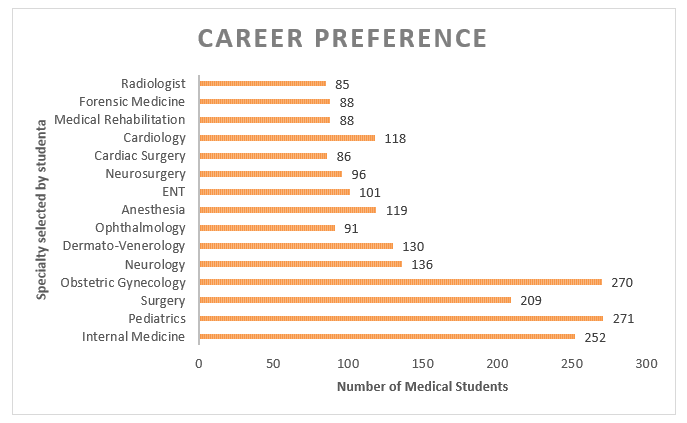
Notice the "coords" attribute? it encodes page index and their respective coordinate in the PDF file. The format of the encoding is described in GROBID documentation page. I extract some of the <figure> tag that most likely a picture or table and crop that as an image. In this scenario, the extracted images are shown below:
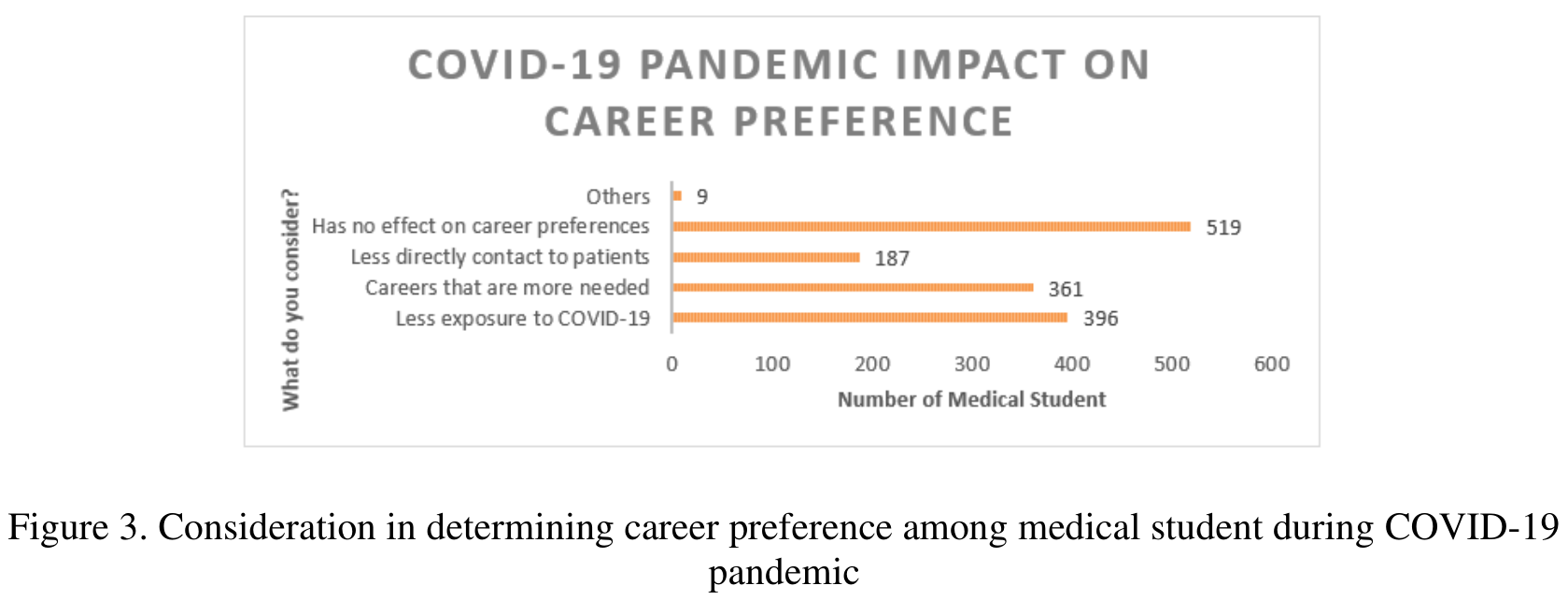
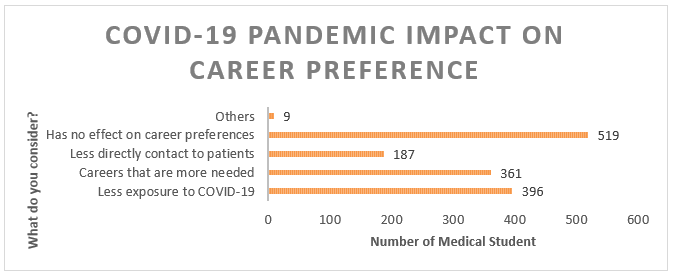
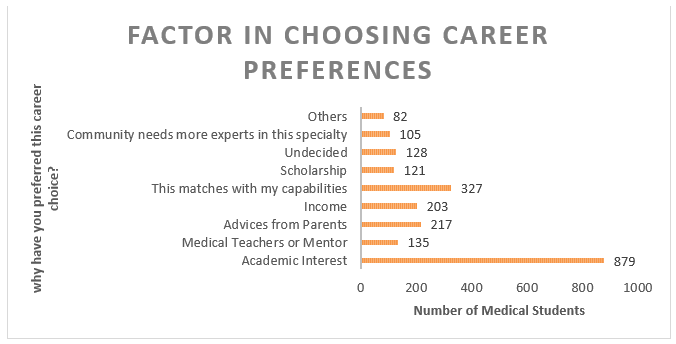

Additionally, I also extract the first page as a thumbnail.
The extracted header, authors, and bibliography are converted in a JSON schema that aligns with the database schema shown below:
{
"article_id": "170",
"journal_id": "1",
"bib_extracted_at": "07-03-23 02:39:04",
"errors": "",
"extracted_data": {
"header": {
"title": "Medical crisis during pandemic: Career preferences change in medical student",
"publisher": "",
"published_date": "",
"abstract": "The COVID-19 pandemic is a major threat to global education. Incidental emotions of fear and anxiety during pandemic have unconsciously influenced preference and outcome about their future career. This study aimed to assess the effect of the COVID-19 pandemic towards career preference change in medical students. A total of 1,027 responses from all over the medical students in Indonesia were collected from an online questionnaire which was broadcasted through social media from 14th July 2020-21st July 2020. This study was using Fear of COVID-19 Scale (FCV-19S) and Depression Anxiety Stress-Scale-21 (DASS-21) to assess fear of COVID-19, stress, anxiety, and depression. Out of 1,027 respondents, 44.6% had stressed, 47.8% had anxiety, and 18.5% had depression with an average FCV-19S score was 17.1. The result showed that the fear and anxiety of COVID-19 during the pandemic had associated significantly with the career decisions in medical students (p=<0.05). Indonesian policymakers had to keep in mind that the fear of the COVID-19 pandemic in medical students is due to the high mortality COVID-19 cases of health workers in Indonesia. Health workers need adequate working conditions and specific protection, this requires prompt attention from stakeholders.",
"keywords": "Career preference;COVID-19;Indonesia;Medical student;Pandemics"
},
"author": [
{
"first_name": "Dian",
"last_name": "Natalia",
"author_role": "",
"author_order": "1",
"email": "",
"department": "Medical Profession Students;Medical Faculty;",
"institution": "Sriwijaya University;",
"country": "Indonesia",
"country_id": "ID"
},
{
"first_name": "Rizma Adlia",
"last_name": "Syakurah",
"author_role": "corresp",
"author_order": "2",
"email": "rizma.syakurah@gmail.com",
"department": "Public Health Faculty;",
"institution": "Sriwijaya University;",
"country": "Indonesia",
"country_id": "ID"
},
{
"first_name": "Article",
"last_name": "Info",
"author_role": "",
"author_order": "3",
"email": "",
"department": "",
"institution": "",
"country": "",
"country_id": ""
},
{
"first_name": "",
"last_name": "",
"author_role": "",
"author_order": "4",
"email": "",
"department": "Public Health Faculty;",
"institution": "Sriwijaya University Jl. Raya Palembang-Prabumulih KM;",
"country": "",
"country_id": ""
},
{
"first_name": "",
"last_name": "",
"author_role": "",
"author_order": "5",
"email": "",
"department": "",
"institution": "Ogan Ilir;Sumatera Selatan;",
"country": "Indonesia",
"country_id": "ID"
}
],
"bib": [
{
"title": "Coronavirus disease 2019 (COVID-19): Situation report-88",
"title_j": "",
"authors": "",
"DOI": "",
"link": "https:\/\/www.who.int\/publications\/m\/item\/situation-report---88",
"editor": "",
"volume": "",
"issue": "",
"page": "",
"publish_year": "2020",
"publish_date": "2020-07-25",
"organization": ""
},
{
"title": "COVID-19 coronavirus pandemic reported cases",
"title_j": "",
"authors": [
{
"first": "",
"last": "Worldometers"
}
],
"DOI": "",
"link": "https:\/\/www.worldometers.info\/coronavirus",
"editor": "",
"volume": "",
"issue": "",
"page": "",
"publish_year": "2020",
"publish_date": "2020-07-25",
"organization": ""
},
{
"title": "COVID-19 coronavirus pandemic reported cases",
"title_j": "",
"authors": [
{
"first": "",
"last": "Worldometers"
}
],
"DOI": "",
"link": "https:\/\/www.worldometers.info\/coronavirus",
"editor": "",
"volume": "",
"issue": "",
"page": "",
"publish_year": "2020",
"publish_date": "2020-05-23",
"organization": ""
},
{
"title": "The impact of COVID-19 on medical education",
"title_j": "Cureus",
"authors": [
{
"first": "M N",
"last": "Ferrel"
},
{
"first": "J J",
"last": "Ryan"
}
],
"DOI": "10.7759\/cureus.7492",
"link": "",
"editor": "",
"volume": "12",
"issue": "3",
"page": "",
"publish_year": "2020",
"publish_date": "",
"organization": ""
},
{
"title": "The Covid-19 crisis as a career shock: Implications for careers and vocational behavior",
"title_j": "Journal of Vocational Behavior",
"authors": [
{
"first": "J",
"last": "Akkermans"
},
{
"first": "J",
"last": "Richardson"
},
{
"first": "M",
"last": "Kraimer"
}
],
"DOI": "10.1016\/j.jvb.2020.103434",
"link": "",
"editor": "",
"volume": "119",
"issue": "",
"page": "",
"publish_year": "2020",
"publish_date": "2020-06",
"organization": ""
},
{
"title": "Physician deaths from corona virus (COVID-19) disease",
"title_j": "",
"authors": [
{
"first": "E B",
"last": "Ing"
},
{
"first": "Q A",
"last": "Xu"
},
{
"first": "A",
"last": "Salimi"
},
{
"first": "N",
"last": "Torun"
}
],
"DOI": "10.1093\/occmed\/kqaa088",
"link": "",
"editor": "",
"volume": "70",
"issue": "",
"page": "370-374",
"publish_year": "2020",
"publish_date": "",
"organization": ""
},
{
"title": "COVID-19 among health workers in Germany and Malaysia",
"title_j": "International Journal of Environmental Research and Public Health",
"authors": [
{
"first": "A",
"last": "Nienhaus"
},
{
"first": "R",
"last": "Hod"
}
],
"DOI": "10.3390\/ijerph17134881",
"link": "",
"editor": "",
"volume": "17",
"issue": "13",
"page": "",
"publish_year": "2020",
"publish_date": "",
"organization": ""
},
{
"title": "Job insecurity: An integrative review and agenda for future research",
"title_j": "Journal of Management",
"authors": [
{
"first": "M K",
"last": "Shoss"
}
],
"DOI": "10.1177\/0149206317691574",
"link": "",
"editor": "",
"volume": "43",
"issue": "6",
"page": "1911-1939",
"publish_year": "2017",
"publish_date": "",
"organization": ""
},
{
"title": "Pandemics and their impact on medical training: Lessons from Singapore",
"title_j": "Academic Medicine",
"authors": [
{
"first": "Z C",
"last": "Liang"
},
{
"first": "S B S",
"last": "Ooi"
},
{
"first": "W",
"last": "Wang"
}
],
"DOI": "10.1097\/ACM.0000000000003441",
"link": "",
"editor": "",
"volume": "95",
"issue": "9",
"page": "1359-1361",
"publish_year": "2020",
"publish_date": "",
"organization": ""
},
{
"title": "Evaluation of implementation and satisfaction of distance learning among medical students during COVID-19 pandemic in Indonesia",
"title_j": "International Journal of Research in Medical Sciences",
"authors": [
{
"first": "R",
"last": "Wiranto"
},
{
"first": "R A",
"last": "Syakurah"
}
],
"DOI": "10.18203\/2320-6012.ijrms20205291",
"link": "",
"editor": "",
"volume": "8",
"issue": "12",
"page": "4212-4218",
"publish_year": "2020",
"publish_date": "",
"organization": ""
},
{
"title": "Specialty preferences among final year medical students in medical schools of southeast Nigeria: Need for career guidance",
"title_j": "BMC Medical Education",
"authors": [
{
"first": "E N",
"last": "Ossai"
},
{
"first": "K A",
"last": "Uwakwe"
},
{
"first": "U C",
"last": "Anyanwagu"
},
{
"first": "N C",
"last": "Ibiok"
},
{
"first": "B N",
"last": "Azuogu"
},
{
"first": "N",
"last": "Ekeke"
}
],
"DOI": "10.1186\/s12909-016-0781-3",
"link": "",
"editor": "",
"volume": "16",
"issue": "1",
"page": "1-8",
"publish_year": "2016",
"publish_date": "",
"organization": ""
},
{
"title": "Mapping the factors that influence the career specialty preferences by the undergraduate medical students",
"title_j": "Saudi Journal of Biological Sciences",
"authors": [
{
"first": "S Y",
"last": "Guraya"
},
{
"first": "H H",
"last": "Almaramhy"
}
],
"DOI": "10.1016\/j.sjbs.2017.03.019",
"link": "",
"editor": "",
"volume": "25",
"issue": "6",
"page": "1096-1101",
"publish_year": "2018",
"publish_date": "",
"organization": ""
},
{
"title": "Resident physician exposure to novel coronavirus (2019-nCoV, SARS-CoV-2) within New York City during exponential phase of COVID-19 pandemic: report of the New York City residency program directors COVID-19 research group",
"title_j": "MedRxiv. pp",
"authors": [
{
"first": "M P",
"last": "Breazzano"
}
],
"DOI": "10.1101\/2020.04.23.20074310",
"link": "",
"editor": "",
"volume": "",
"issue": "",
"page": "",
"publish_year": "2020",
"publish_date": "",
"organization": ""
},
{
"title": "Dynamics of career choice among students in undergraduate medical courses. A BEME systematic review: BEME Guide No. 33",
"title_j": "Medical Teacher",
"authors": [
{
"first": "S J",
"last": "Querido"
},
{
"first": "D",
"last": "Vergouw"
},
{
"first": "L",
"last": "Wigersma"
},
{
"first": "R S",
"last": "Batenburg"
},
{
"first": "M E",
"last": "De Rond"
},
{
"first": "O T",
"last": "Ten"
},
{
"first": "Cate",
"last": ""
}
],
"DOI": "10.3109\/0142159X.2015.1074990",
"link": "",
"editor": "",
"volume": "38",
"issue": "1",
"page": "18-29",
"publish_year": "2016",
"publish_date": "",
"organization": ""
},
{
"title": "Career self-efficacy theory: Back to the future",
"title_j": "Journal of Career Assessment",
"authors": [
{
"first": "N E",
"last": "Betz"
},
{
"first": "G",
"last": "Hackett"
}
],
"DOI": "10.1177\/1069072705281347",
"link": "",
"editor": "",
"volume": "14",
"issue": "1",
"page": "3-11",
"publish_year": "2006",
"publish_date": "",
"organization": ""
},
{
"title": "Social reaction toward the 2019 novel coronavirus (COVID-19)",
"title_j": "Social Health and Behavior",
"authors": [
{
"first": "C Y",
"last": "Lin"
}
],
"DOI": "10.4103\/SHB.SHB_11_20",
"link": "",
"editor": "",
"volume": "3",
"issue": "1",
"page": "1-2",
"publish_year": "2020",
"publish_date": "",
"organization": ""
},
{
"title": "Does 'Fear of COVID-19'trigger future career anxiety? An empirical investigation considering depression from COVID-19 as a mediator",
"title_j": "The International Journal of Social Psychiatry",
"authors": [
{
"first": "M S",
"last": "Mahmud"
},
{
"first": "M U",
"last": "Talukder"
},
{
"first": "S M",
"last": "Rahman"
}
],
"DOI": "10.1177\/0020764020935488",
"link": "",
"editor": "",
"volume": "67",
"issue": "1",
"page": "35-45",
"publish_year": "2021",
"publish_date": "",
"organization": ""
},
{
"title": "How do different kinds of incidental emotions influence risk decision making?",
"title_j": "Biological Psychology",
"authors": [
{
"first": "Q",
"last": "Yang"
},
{
"first": "S",
"last": "Zhou"
},
{
"first": "R",
"last": "Gu"
},
{
"first": "Y",
"last": "Wu"
}
],
"DOI": "10.1016\/j.biopsycho.2020.107920",
"link": "",
"editor": "",
"volume": "154",
"issue": "",
"page": "",
"publish_year": "2020",
"publish_date": "2020-07",
"organization": ""
},
{
"title": "The fear of COVID-19 scale: development and initial validation",
"title_j": "International Journal of Mental Health and Addiction",
"authors": [
{
"first": "D K",
"last": "Ahorsu"
},
{
"first": "C Y",
"last": "Lin"
},
{
"first": "V",
"last": "Imani"
},
{
"first": "M",
"last": "Saffari"
},
{
"first": "M D",
"last": "Griffiths"
},
{
"first": "A H",
"last": "Pakpour"
}
],
"DOI": "10.1007\/s11469-020-00270-8",
"link": "",
"editor": "",
"volume": "",
"issue": "",
"page": "",
"publish_year": "2020",
"publish_date": "",
"organization": ""
},
{
"title": "Psychometric properties of the 42-item and 21-item versions of the Depression Anxiety Stress Scales in clinical groups and a community sample",
"title_j": "Psychological Assessment",
"authors": [
{
"first": "M M",
"last": "Antony"
},
{
"first": "P J",
"last": "Bieling"
},
{
"first": "B J",
"last": "Cox"
},
{
"first": "M W",
"last": "Enns"
},
{
"first": "R P",
"last": "Swinson"
}
],
"DOI": "10.1037\/1040-3590.10.2.176",
"link": "",
"editor": "",
"volume": "10",
"issue": "2",
"page": "176-181",
"publish_year": "1998",
"publish_date": "",
"organization": ""
},
{
"title": "Career preferences of final year medical students at a medical school in Kenya-A cross sectional study",
"title_j": "BMC Medical Education",
"authors": [
{
"first": "H",
"last": "Dossajee"
},
{
"first": "N",
"last": "Obonyo"
},
{
"first": "S M",
"last": "Ahmed"
}
],
"DOI": "10.1186\/s12909-016-0528-1",
"link": "",
"editor": "",
"volume": "16",
"issue": "1",
"page": "1-10",
"publish_year": "2016",
"publish_date": "",
"organization": ""
},
{
"title": "Gender bias in specialty preferences among Danish medical students: a cross-sectional study",
"title_j": "Dan Med Bull",
"authors": [
{
"first": "L T",
"last": "Pedersen"
},
{
"first": "N H",
"last": "Bak"
},
{
"first": "A S",
"last": "Dissing"
},
{
"first": "B H",
"last": "Petersson"
}
],
"DOI": "",
"link": "",
"editor": "",
"volume": "58",
"issue": "9",
"page": "",
"publish_year": "2011",
"publish_date": "",
"organization": ""
},
{
"title": "\uf072 Medical crisis during pandemic: Career preferences change in medical student",
"title_j": "Int J Eval & Res Educ",
"authors": "",
"DOI": "",
"link": "",
"editor": "",
"volume": "",
"issue": "",
"page": "1261",
"publish_year": "",
"publish_date": "",
"organization": ""
},
{
"title": "Specialty preferences among medical students in a Kenyan university",
"title_j": "Pan African Medical Journal",
"authors": [
{
"first": "P",
"last": "Mwachaka"
},
{
"first": "E",
"last": "Mbugua"
}
],
"DOI": "10.4314\/pamj.v5i1.56174",
"link": "",
"editor": "",
"volume": "5",
"issue": "18",
"page": "1-13",
"publish_year": "2010",
"publish_date": "",
"organization": ""
},
{
"title": "Medical student career choice's determinants in Asia: a systematic review",
"title_j": "International Journal of Public Health Science (IJPHS)",
"authors": [
{
"first": "R A",
"last": "Syakurah"
},
{
"first": "R",
"last": "Rosyila"
}
],
"DOI": "10.11591\/ijphs.v9i1.20400",
"link": "",
"editor": "",
"volume": "9",
"issue": "1",
"page": "57-61",
"publish_year": "2020",
"publish_date": "",
"organization": ""
},
{
"title": "Factors influencing subspecialty choice among medical students: a systematic review and metaanalysis",
"title_j": "BMJ Open",
"authors": [
{
"first": "Y",
"last": "Yang"
}
],
"DOI": "10.1136\/bmjopen-2018-022097",
"link": "",
"editor": "",
"volume": "9",
"issue": "3",
"page": "",
"publish_year": "2019",
"publish_date": "",
"organization": ""
},
{
"title": "Career choices of medical students: a national survey of 1780 students",
"title_j": "Medical Education",
"authors": [
{
"first": "J H",
"last": "Lefevre"
},
{
"first": "M",
"last": "Roupret"
},
{
"first": "S",
"last": "Kerneis"
},
{
"first": "L",
"last": "Karila"
}
],
"DOI": "10.1111\/j.1365-2923.2010.03707.x",
"link": "",
"editor": "",
"volume": "44",
"issue": "6",
"page": "603-612",
"publish_year": "2010",
"publish_date": "",
"organization": ""
},
{
"title": "What factors influence British medical students' career intentions?",
"title_j": "Medical Teacher",
"authors": [
{
"first": "M",
"last": "Ibrahim"
}
],
"DOI": "10.3109\/0142159X.2014.923560",
"link": "",
"editor": "",
"volume": "36",
"issue": "12",
"page": "1064-1072",
"publish_year": "2014",
"publish_date": "",
"organization": ""
},
{
"title": "Future specialization interests among medical students in southern India",
"title_j": "The National Medical Journal of India",
"authors": [
{
"first": "S H",
"last": "Subba"
}
],
"DOI": "",
"link": "",
"editor": "",
"volume": "25",
"issue": "4",
"page": "226-229",
"publish_year": "2012",
"publish_date": "",
"organization": ""
},
{
"title": "Mental health and psychosocial problems of medical health workers during the COVID-19 epidemic in China",
"title_j": "Psychotherapy and Psychosomatics",
"authors": [
{
"first": "W R",
"last": "Zhang"
}
],
"DOI": "10.1159\/000507639",
"link": "",
"editor": "",
"volume": "89",
"issue": "4",
"page": "242-250",
"publish_year": "2020",
"publish_date": "",
"organization": ""
},
{
"title": "Parental influences on medical students' self-efficacy and career exploration in collectivist culture",
"title_j": "Journal of Education and Health Promotion",
"authors": [
{
"first": "A",
"last": "Jasmon"
},
{
"first": "F",
"last": "Masturah"
},
{
"first": "N S",
"last": "Nugraha"
},
{
"first": "R A",
"last": "Syakurah"
},
{
"first": "A",
"last": "Afifah"
},
{
"first": "R",
"last": "Siburian"
}
],
"DOI": "10.4103\/jehp.jehp_86_20",
"link": "",
"editor": "",
"volume": "9",
"issue": "",
"page": "222",
"publish_year": "2020",
"publish_date": "",
"organization": ""
},
{
"title": "Modeling of factors influencing exploration of medical career choices",
"title_j": "International Journal of Public Health Science (IJPHS)",
"authors": [
{
"first": "R A",
"last": "Syakurah"
},
{
"first": "Y S",
"last": "Prabandari"
},
{
"first": "T",
"last": "Widyandana"
},
{
"first": "",
"last": "Bramantoro"
}
],
"DOI": "10.11591\/ijphs.v10i1.20513",
"link": "",
"editor": "",
"volume": "10",
"issue": "1",
"page": "175-180",
"publish_year": "2021",
"publish_date": "",
"organization": ""
},
{
"title": "S\u00edntomas ansiosos y depresivos en poblaci\u00f3n general y personal m\u00e9dico del Hospital Cayetano Heredia asociados a la cuarentena y atenci\u00f3n de la pandemia COVID-19 en Lima",
"title_j": "Scielo",
"authors": [
{
"first": "S Aliaga",
"last": "Tinoco"
}
],
"DOI": "",
"link": "https:\/\/hdl.handle.net\/20.500.12866\/7889",
"editor": "",
"volume": "83",
"issue": "1",
"page": "",
"publish_year": "2020",
"publish_date": "",
"organization": ""
},
{
"title": "Mental health state in medical students during COVID-19 pandemic",
"title_j": "Journal of Education and Health Promotion",
"authors": [
{
"first": "D",
"last": "Natalia"
},
{
"first": "R A",
"last": "Syakurah"
}
],
"DOI": "",
"link": "",
"editor": "",
"volume": "10",
"issue": "1",
"page": "208",
"publish_year": "2021",
"publish_date": "",
"organization": ""
},
{
"title": "COVID-19 amongst the pandemic of medical student mental health",
"title_j": "International Journal of Medical Students",
"authors": [
{
"first": "L",
"last": "Komer"
}
],
"DOI": "10.5195\/ijms.2020.501",
"link": "",
"editor": "",
"volume": "8",
"issue": "1",
"page": "56-57",
"publish_year": "2020",
"publish_date": "",
"organization": ""
},
{
"title": "Medical student psychological distress and mental illness relative to the general population: a Canadian cross-sectional survey",
"title_j": "Academic Medicine",
"authors": [
{
"first": "B",
"last": "Maser"
},
{
"first": "M",
"last": "Danilewitz"
},
{
"first": "E",
"last": "Gu\u00e9rin"
},
{
"first": "L",
"last": "Findlay"
},
{
"first": "E",
"last": "Frank"
}
],
"DOI": "10.1097\/ACM.0000000000002958",
"link": "",
"editor": "",
"volume": "94",
"issue": "11",
"page": "1781-1791",
"publish_year": "2019",
"publish_date": "",
"organization": ""
},
{
"title": "Wellbeing and mental health amongst medical students in Canada",
"title_j": "International Review of Psychiatry",
"authors": [
{
"first": "C",
"last": "Wilkes"
}
],
"DOI": "10.1080\/09540261.2019.1675927",
"link": "",
"editor": "",
"volume": "31",
"issue": "7-8",
"page": "584-587",
"publish_year": "2019",
"publish_date": "",
"organization": ""
},
{
"title": "Covid-19: risk factors for severe disease and death",
"title_j": "BMJ",
"authors": [
{
"first": "R E",
"last": "Jordan"
},
{
"first": "P",
"last": "Adab"
},
{
"first": "K K",
"last": "Cheng"
}
],
"DOI": "10.1136\/bmj.m1198",
"link": "",
"editor": "",
"volume": "",
"issue": "",
"page": "",
"publish_year": "2020",
"publish_date": "",
"organization": ""
},
{
"title": "Psychological impact of the 2015 MERS outbreak on hospital workers and quarantined hemodialysis patients",
"title_j": "Comprehensive Psychiatry",
"authors": [
{
"first": "S M",
"last": "Lee"
},
{
"first": "W S",
"last": "Kang"
},
{
"first": "A.-R",
"last": "Cho"
},
{
"first": "T",
"last": "Kim"
},
{
"first": "J K",
"last": "Park"
}
],
"DOI": "10.1016\/j.comppsych.2018.10.003",
"link": "",
"editor": "",
"volume": "87",
"issue": "",
"page": "123-127",
"publish_year": "2018",
"publish_date": "",
"organization": ""
},
{
"title": "Emotion in organizational judgment and decision making",
"title_j": "Organizational Dynamics",
"authors": [
{
"first": "C A",
"last": "Dorison"
},
{
"first": "J",
"last": "Klusowski"
},
{
"first": "S",
"last": "Han"
},
{
"first": "J S",
"last": "Lerner"
}
],
"DOI": "10.1016\/j.orgdyn.2019.02.004",
"link": "",
"editor": "",
"volume": "49",
"issue": "1",
"page": "100702",
"publish_year": "2020",
"publish_date": "",
"organization": ""
}
]
}
}